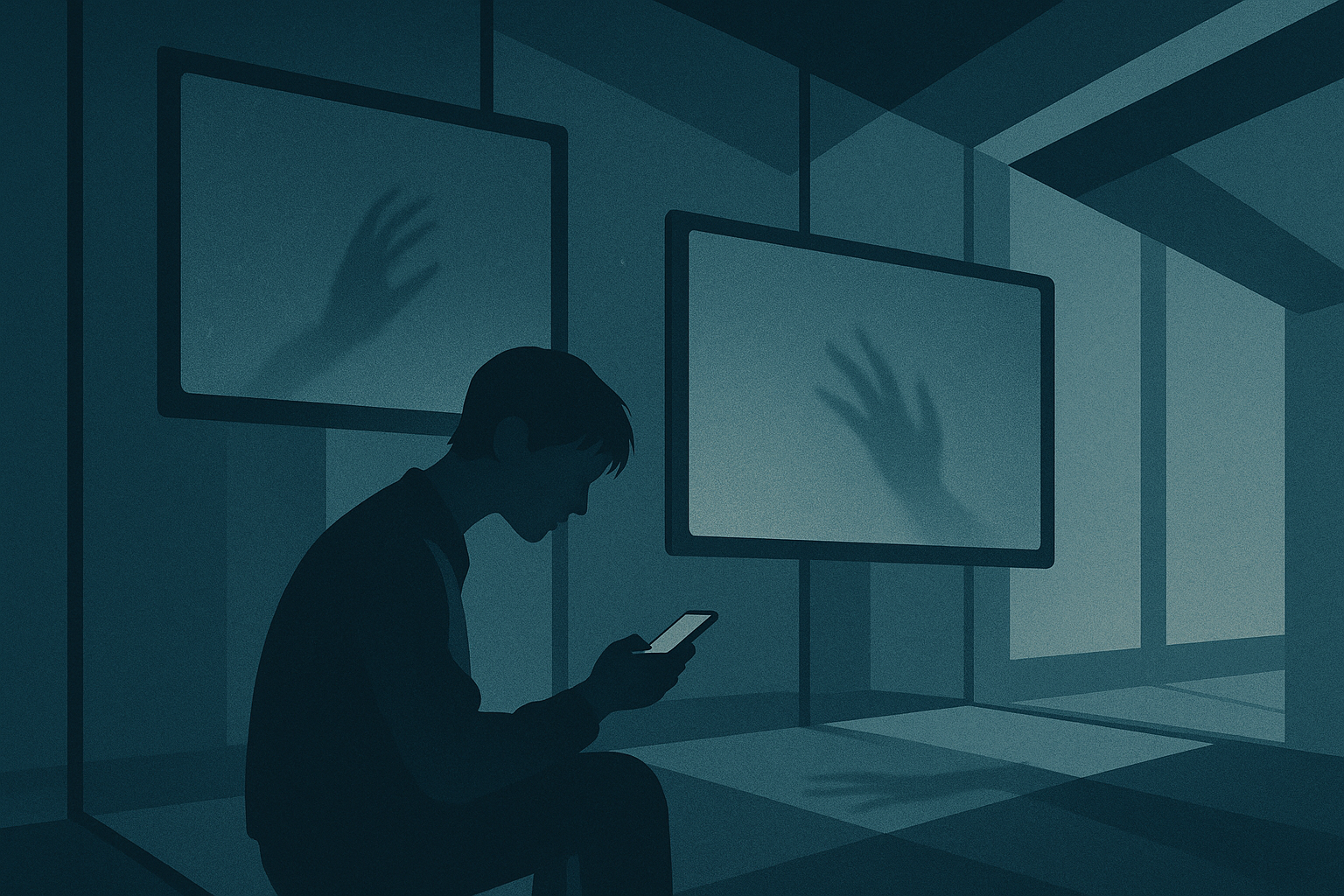
Seven in ten UK millennials report feeling lonely. If that includes you, you’re – paradoxically – far from alone.
We’re more digitally connected than any generation before us. Hundreds of online contacts, messaging that spans the globe in seconds, constant notifications. And yet that connectivity sits right alongside a deeper kind of disconnection that no notification can reach. The ironic thing is that the tools designed to keep us close may be part of the reason we’re missing the type of connection our brains actually need.
What the research shows is both sobering and hopeful: 8 to 10 minutes of intentional, undistracted interaction – a “10-minute social reset” – can measurably improve mental health and sense of belonging. You don’t need to overhaul your social life. You need intention.
Why Millennials Are Lonelier Than Ever
The statistics are striking. According to the Community Life Survey 2024/25, 70% of young Brits aged 18-24 experience loneliness – significantly higher than the over-65s, where the figure is 50% or below. Separately, 72% of 16 to 25-year-olds say loneliness actively damages their mental health.
In clinic, I’ve noticed this more over time. Not everyone has a circle of friends they can rely on – and it’s particularly visible when patients move into an area where friend groups are already formed and, often, quietly closed. You can live in a city of millions and feel entirely without a social foothold.
The contradiction is disorienting. You’re in constant digital contact – messages, group chats, notifications – yet still feeling unseen. Online connection simply doesn’t activate the same physiological and psychological responses as face-to-face interaction. You can exchange hundreds of messages and still feel fundamentally missed. What screens can’t transmit are the things that actually signal presence and trust: eye contact, facial microexpressions, the physical reality of someone being there.
The health stakes are significant. Research from the UK Biobank tracked 458,146 participants over 12.6 years and found that those living alone with fewer than monthly visits to friends and family had a 77% higher risk of premature death compared to those with daily social contact – greater, the researchers noted, than the risk associated with smoking or obesity. It’s a stark figure. Worth knowing not to frighten, but because understanding the stakes is what makes the practical steps feel worth taking. Social isolation affects physical health directly. Loneliness is not a mood. It’s a health risk.
Why 10 Minutes Actually Matters
Addressing this doesn’t require major life changes. The UK Biobank research found a clear threshold effect: weekly social contact creates protective health outcomes, while less than monthly contact dramatically increases risk. The practical implication is useful – frequency beats duration. Regular short interactions appear more protective than infrequent long ones. Ten focused minutes weekly will serve you better than hoping to carve out a whole day every few months.
Intervention research supports this too. Bruehlman-Senecal et al. (2020) studied college students using a cognitive-behavioural app with simple 8 to 10-minute social prompts and found measurable reductions in loneliness – with the greatest gains in those with the highest baseline depression. A field study by Li et al. (2025) found something equally striking: when people made explicit, specific signals about wanting to connect, interaction frequency, depth, and length all increased. People want connection. They just need clear, low-pressure invitations.
What happens biologically matters here too. Undistracted face-to-face conversation triggers oxytocin release – the brain’s bonding hormone. This isn’t a soft psychological effect. It’s measurable neurochemistry. Screens don’t activate this response in the same way. You can be on a video call for an hour and feel less connected than after 10 minutes in someone’s living room.
What Screens Really Do to Your Relationships
Screens are valuable. They keep relationships alive across distance, maintain contact when proximity isn’t possible. But there’s one thing they can’t replicate: the full richness of in-person connection.
This has become more visible since the pandemic. Hybrid working has removed something specific for a lot of people – the day-to-day camaraderie of sharing a physical space with colleagues. It’s the kind of low-stakes, incidental social contact you don’t notice until it’s gone. Pre-pandemic, this wasn’t something that came up much in clinic. Now it does.
Between 65% and 93% of emotional communication happens non-verbally – through eye contact, facial expression, and the micro-movements that signal trustworthiness and openness. Video calls fragment all of this. You look at the screen rather than the camera, so eye contact is never quite right. Subtle expressions are harder to read. Body language is cut off at the frame. Research by Houghton et al. (2018) found that even having a phone visible during an in-person conversation reduces the perceived quality of that interaction.
There’s a fragmentation problem too. Texting throughout the day creates surface-level contact in dozens of pieces. Deeper sharing needs something different – uninterrupted, sustained attention where vulnerability is actually possible. Digital interruption prevents exactly that kind of space from forming.
Use screens for maintenance – to keep relationships alive across distance. Use in-person, undistracted time for deepening. That’s where real intimacy builds.
Five “10-Minute Social Reset” Strategies
These aren’t novel social skills. They’re evidence-backed approaches to shift how you already interact. The key is intention – understanding why these work so you’ll actually use them.
Strategy 1: The Vulnerability Conversation (8-10 minutes)
Emotional intimacy research is clear on this: vulnerability begets vulnerability. When you share something genuine – a challenge, a question, something you’ve been sitting with – the other person typically mirrors that honesty. Conversation moves from surface-level to something real.
Next time you’re with a friend, try: “I’ve been finding [something specific] difficult lately – I’d appreciate your thoughts.” Ask follow-ups that invite depth: “What’s been hard for you recently?” Listen without the urge to problem-solve unless they ask. Even a small shift – “What’s going on your end?” instead of “How are you?” – opens a different kind of door.
Research on reciprocal vulnerability confirms this mechanism directly – it’s one of the core components in effective loneliness interventions (Bruehlman-Senecal et al., 2020; Aron et al., 1997).
Strategy 2: Explicit Signals of Openness (5-minute initiative)
Many people undermine their own attempts at connection with vague overtures. “We should catch up sometime” is polite friction – it sounds like an invitation but removes all the ease of saying yes. Li et al. (2025) found that explicit signals of willingness to connect dramatically increased interaction frequency, depth, and length. Clarity removes guesswork.
Be specific. “Fancy a proper catch-up call Thursday evening? Twenty minutes?” beats “We should chat soon” every time. Specificity makes it easy to say yes. Easy yes means it actually happens. Use this weekly or fortnightly – consistency matters more than the length of the call.
Strategy 3: Cognitive Reframing Your Effort
There’s a mindset element here. If you frame a 10-minute call as “not really enough”, you’ll engage differently than if you frame it as “real connection, done efficiently.” Research on mindset shows that how you view an effort predicts both your follow-through and the quality of your engagement.
When guilt creeps in about “not having enough time for people”, notice the thought and reframe it. From: “A 10-minute call isn’t quality time.” To: “A focused, undistracted 10 minutes creates real connection.” The frequency-plus-attention combination is what the research supports. That framing shift changes how you show up entirely.
Strategy 4: Structured Micro-Commitments (Activity-based)
NHS social prescribing data consistently shows that structured, recurring activities outperform vague plans to “see people more”. The structure removes the daily decision about whether to bother.
Pick one person and one activity – a walk, a coffee, a regular check-in call. Set a specific time: “Every Tuesday at 7 we walk” or “Every Thursday at 6 I call.” Put it in the calendar as non-negotiable. Reliability is what transforms sporadic contact into actual connection. “Every Tuesday at 7:20pm, I call my mate” is more protective than hoping to catch up someday.
Strategy 5: The Conversation Starters
The type of question you ask determines the depth of conversation you get. Open questions about values, experiences, and reflection invite genuine sharing. Closed questions don’t.
- “What’s something you’ve learned about yourself recently?”
- “What are you excited about right now?”
- “What’s something you’ve been thinking about differently lately?”
- “If you could change one thing about your life right now, what would it be?”
- “What are you spending time on outside work at the minute?”
I’ve used questions like these for years – in social settings, whenever I want to get to know someone properly rather than just pass the time. People can be a bit guarded at first, but when they sense genuine curiosity rather than small talk, something shifts. They open up, and the conversation – and the connection – goes somewhere real. That last question on the list is probably my most-used; it’s low-pressure, and the answer almost always tells you something meaningful about a person.
Start With Just 10 Minutes: Intention Matters More Than Time
Loneliness isn’t a character flaw. It’s a signal – a clear one – that a genuine human need isn’t being met. The good news is that addressing it doesn’t require overhauling everything.
This week, pick one thing. One 10-minute conversation using the vulnerability framework. One specific invitation sent to someone you want to connect with more. One weekly micro-commitment. Consistent, small actions create measurable shifts in mental health and sense of belonging.
Connection is a health need, not a nice-to-have. Treat it accordingly.
Have you come across “Frientimacy“? It’s about building the kind of deep, reciprocal friendships that genuinely support your health and wellbeing. Worth a read if this article has struck a chord.