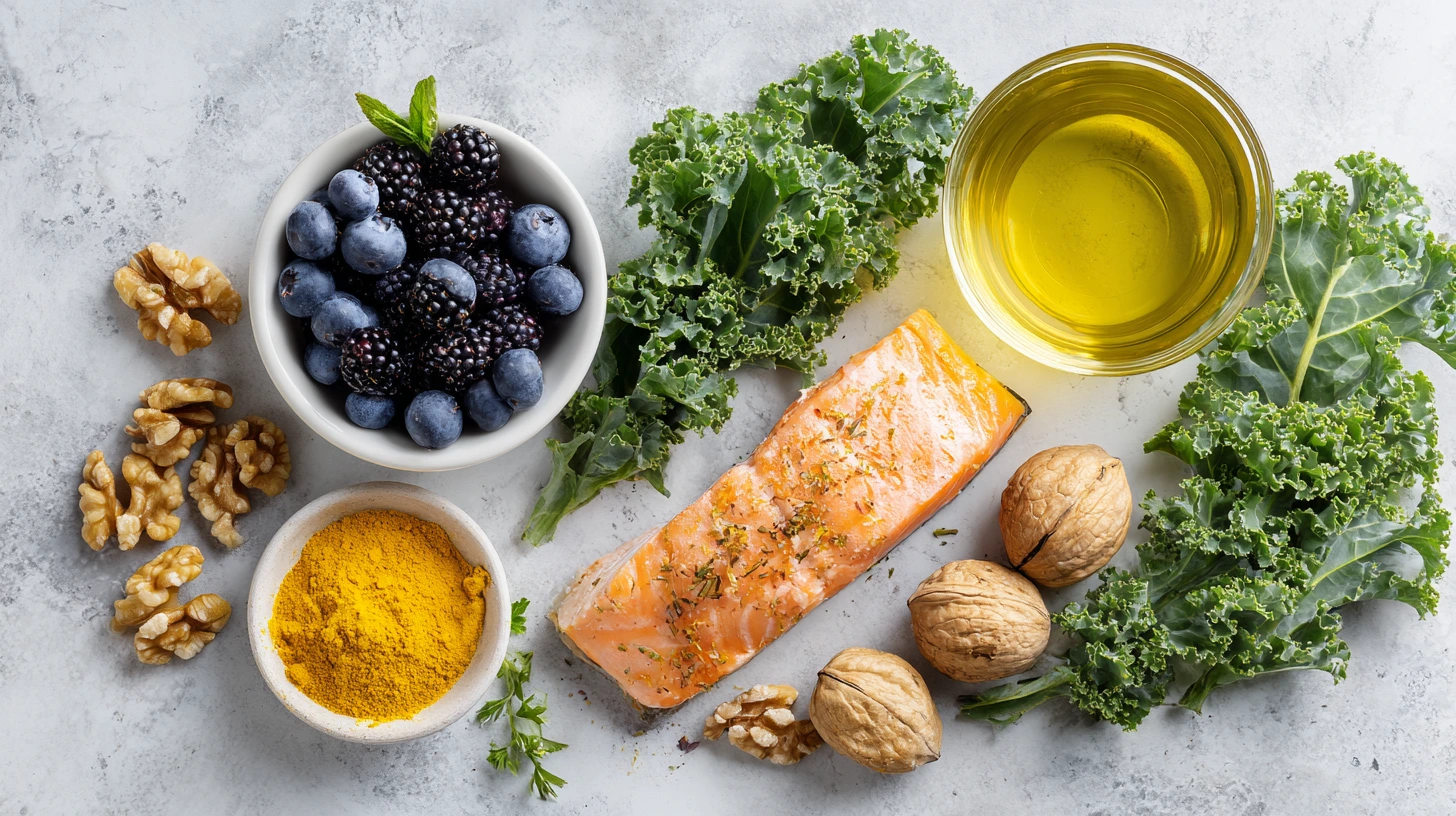
This sort of conversation doesn’t come up much in a standard NHS appointment. Ten minutes doesn’t leave much room for discussing anthocyanin levels. In private practice it’s different – patients come in specifically wanting to talk about diet, inflammation, lifestyle. And the question is almost always some version of the same thing: does any of this actually work, and if so, how much do I need?
Chronic inflammation is tied to increased risk of heart disease and stroke. What we eat can shift inflammation levels in the body – but the gap between vague dietary advice and what the clinical evidence actually shows is significant. I went through the research to find the foods with the strongest trial data behind them, the kind that produces measurable changes in markers like C-Reactive Protein (CRP).
One caveat worth stating upfront: individual responses vary quite a bit depending on genetics, baseline inflammation, and consistency. The timeframes below reflect biomarker changes. Symptom improvements, if they come, often lag behind.
1. Omega-3 Rich Fish: The Strongest Evidence Base
The Evidence: This research shows omega-3s don’t just dampen inflammation – they actively help resolve it by triggering specialised molecules called resolvins that clear inflammatory cells. That’s a meaningful mechanistic difference from simply blocking inflammation.
Exact Dosage: 1-2g EPA and 500-1000mg DHA daily for therapeutic anti-inflammatory effects.
Practical Food Equivalent: 3-4 servings of oily fish per week. One serving is roughly 100g – about palm-sized. Sardines, mackerel, and salmon are your best value options in most UK supermarkets.
Your Weekly Shopping List: Two tins of sardines and two salmon fillets will do it. Or four mackerel fillets if you prefer. Frozen fish works just as well and is considerably cheaper – no need to reach for fresh if the budget is tight.
Maximum Benefit Tip: Keep cooking temperature below 175°C. High heat degrades omega-3s considerably – worth knowing if you habitually blast fish under a hot grill.
2. Turmeric: The Most Studied Anti-Inflammatory Spice
The Evidence: Harvard’s overview of the evidence notes curcumin – the active compound in turmeric – has anti-inflammatory properties that appear to work via similar pathways to some anti-inflammatory drugs. Trial data shows improvements in arthritis symptoms. That said, the evidence isn’t as strong as it’s sometimes presented, and conventional NSAIDs have a substantially greater effect. Think of turmeric as a useful incremental gain, not a replacement – and certainly not a reason to stop any prescribed medication.
Exact Dosage: 500mg curcumin extract twice daily (1000mg total) for therapeutic effects.
Practical Food Equivalent: 2-3 teaspoons of turmeric powder daily. Be aware that supplements provide far higher curcumin concentrations – around 2-9% in the spice versus up to 95% in extracts – so food alone probably won’t hit therapeutic levels.
Your Daily Goal: Golden milk with turmeric, black pepper, and a fat source like coconut milk, or turmeric stirred into curries, soups, or scrambled eggs.
Maximum Benefit Tip: Black pepper is non-negotiable here. A tiny amount – roughly 1/20 of a teaspoon – increases curcumin absorption by around 2000% through piperine. Add a fat alongside it for even better uptake.
3. Berries: More Than Just Antioxidants
The Evidence: Large-scale epidemiological data links regular berry consumption to reduced risk of cardiovascular disease, diabetes, and all-cause mortality – with clinical evidence supporting anti-inflammatory and antioxidant mechanisms. The data here is genuinely impressive.
Exact Dosage: The evidence suggests meaningful benefit from as little as 7.5mg anthocyanins daily – equivalent to 30-60g of berries. That’s not a lot.
Practical Food Equivalent: 1.5-2 cups of mixed berries daily for optimal antioxidant activity. Frozen works just as well as fresh and is considerably cheaper most of the year.
Your Daily Goal: A handful at breakfast – thrown into porridge, yoghurt, or eaten as-is. Another serving mid-afternoon if you’re keeping snacks sensible.
Maximum Benefit Tip: Go dark. Black elderberries and aronia berries top the anthocyanin charts, followed by blueberries, blackberries, and raspberries. Strawberries are fine, but they’re the least potent of the bunch.
4. Extra Virgin Olive Oil: Not Just a Cooking Fat
The Evidence: EVOO contains oleocanthal, a compound that inhibits COX enzymes – the same mechanism as ibuprofen. Human studies show measurable reductions in inflammatory markers with regular use. Worth knowing when you’re pouring it on.
Exact Dosage: 50g (about 3.5 tablespoons) daily provides roughly 10mg oleocanthal – equivalent to around 10% of an adult ibuprofen dose for anti-inflammatory purposes.
Practical Food Equivalent: Using EVOO as both a cooking oil and salad dressing consistently over a month has shown measurable improvements in inflammatory and oxidative markers in trial settings.
Your Daily Goal: 3-4 tablespoons spread across cooking and dressings. Not difficult if olive oil is already your default fat.
Maximum Benefit Tip: Early-harvest EVOO has the highest oleocanthal content – up to 498mg/kg. A reliable sign of quality: it should create a mild peppery sensation at the back of the throat. If it doesn’t, you’re probably using a refined blend.
5. Leafy Greens: Underrated and Undersold
The Evidence: Nitrate-rich leafy greens convert to nitric oxide in the body, which lowers blood pressure, inhibits platelet clumping, and has anti-inflammatory effects relevant to cardiovascular protection. Straightforward and consistent evidence.
Exact Dosage: The data suggests just one cup daily can boost muscle function and increase nitric oxide levels substantially – some trial data puts the rise as high as eight-fold, though individual variation is considerable.
Practical Food Equivalent: Prioritise the darker varieties – spinach, kale, Swiss chard, and Brussels sprouts are richest in vitamins A, C, and K. Iceberg lettuce won’t cut it.
Your Daily Goal: 1-2 cups of varied dark leafy greens daily. A bag of spinach from Aldi does the job perfectly well.
Maximum Benefit Tip: Steam rather than boil – you lose a lot of water-soluble vitamins down the drain otherwise. Sautéing in olive oil also helps release more phytochemicals and improves absorption.
6. Nuts: A Handful Goes a Long Way
The Evidence: Published research on almonds and walnuts shows both favourably modify inflammation, with walnuts specifically linked to lower CRP – one of the key markers I check when monitoring systemic inflammation.
Exact Dosage: A 30g handful – roughly 10 whole walnuts or ¼ cup – provides 1.9g of omega-3 ALA, meeting recommended intake levels for heart disease prevention.
Practical Food Equivalent: One small daily serving of nuts or 1-2 tablespoons of seeds. That’s a snack-sized portion, not a bowlful.
Your Daily Goal: A small handful of mixed nuts with walnuts making up the bulk. Keep a bag at your desk if you work from home or the office – it’s one of the easiest habits to maintain.
Maximum Benefit Tip: Raw, unsalted, nothing added. Walnuts have substantially more omega-3 than any other nut – they’re not close. If you can only choose one, make it walnuts.
7. Green Tea: Worth the Switch From Coffee
The Evidence: EGCG, the primary polyphenol in green tea, has well-documented anti-inflammatory and antioxidant properties, suppressing inflammatory signalling pathways and reducing oxidative stress in tissue. The mechanistic evidence here is solid.
Exact Dosage: A standard 240ml cup provides roughly 187mg EGCG. You need 200-300mg per cup to reach the range where therapeutic effects have been demonstrated.
Practical Food Equivalent: 2-3 cups of quality brewed green tea daily. Not the teabag-in-for-twenty-seconds version – let it steep properly.
Your Daily Goal: Two or three cups throughout the day. Early morning and mid-afternoon work well, though avoid it close to bedtime if caffeine affects your sleep.
Maximum Benefit Tip: Add a squeeze of fresh lemon. Vitamin C from citrus increases EGCG absorption up to sixfold compared to drinking it plain. Simple and genuinely worth doing.
Start Small. Pick Two.
I’ll be honest: I’m sceptical that any single food on this list is going to transform your inflammatory markers on its own. What I do believe – and what the evidence supports – is that these foods, used consistently and as part of a broader approach that includes physical activity, add up to something meaningful. The whole is more than the sum of its parts.
What I see in practice is that when people make changes like these, they often report an improved sense of overall wellbeing fairly quickly. Whether that’s a direct effect of the foods, or a positive halo from the behaviour change itself – the sense that you’re doing something good – is hard to untangle. Honestly, it probably doesn’t matter much either way.
If I had to point anyone toward the highest-leverage starting point, it’s oily fish and berries. Frozen is fine for both – cheaper and no less effective. Turmeric is worth adding once you’re consistent with the basics, but keep expectations calibrated: it helps at the margins, with black pepper, and not as a substitute for anything your GP has prescribed.
So which two of these are actually going to make it into your week?