Patients ask me about supplements a lot. There’s always something being marketed as the missing piece – a new compound, a targeted extract, something a health influencer is swearing by. My usual answer is that food generally does a better job. A study published in Nature Food has given me another reason to say it.
The research tracked over 120,000 adults for nearly a decade. As a lifestyle medicine doctor, I approach nutrition studies with a degree of caution – the track record of the field isn’t always great. But this one earned more of my attention than most, and I think it’s worth looking at carefully.
What the Research Actually Shows
Flavonoids are the compounds that give plant foods their colour and flavour – the deep purple in blueberries, the bright orange in carrots, the rich green in spinach. There are hundreds of them, and they operate through different biological mechanisms. That last part is what makes this study’s central finding so interesting.
Rather than measuring total flavonoid intake – how much people consumed – the researchers looked at flavonoid diversity: how many different types. The results were striking:
- 20-30% lower risk of premature death in those with the most diverse flavonoid intake
- 15-25% reduced risk of heart disease
- 15-30% lower chance of developing type 2 diabetes
- 10-20% reduced cancer risk
Those aren’t trivial numbers. Risk reductions of that magnitude put this in the same territory as some established medical interventions for chronic disease prevention. Worth paying attention to.
A Sceptical Voice (And Why It Matters)
Any honest reading of nutritional epidemiology has to account for healthy user bias – the well-documented pattern where people who eat well also tend to do everything else well. Exercise more. Smoke less. Drink less. Sleep better. So when better health outcomes appear in that group, we have to ask what’s actually driving them.
The study confirmed this pattern. Participants with the most diverse flavonoid intake were more likely to exercise regularly, less likely to smoke, and had healthier BMIs overall. The researchers adjusted for these factors statistically, which helps – but doesn’t fully resolve the question.
Worth staying with, though. Because the counterargument is more interesting than it first appears.
Why This Evidence Deserves More Credit
Having spent time with this research, here’s what shifts my thinking:
The Dose-Response Relationship
This study showed a clear biological gradient. The more diverse the flavonoid intake, the greater the protective effect – in a consistent, stepwise relationship. That dose-response pattern is one of the strongest signals we look for when trying to distinguish genuine causation from coincidence in observational research.
Large Effect Sizes
A 15-30% risk reduction isn’t statistical noise. That’s a number that, if it reflects real causation, would be clinically meaningful at population level. Observational studies showing this kind of consistency across multiple distinct disease outcomes don’t come along often. They warrant serious attention.
Biological Plausibility
We understand how flavonoids work mechanistically. They reduce inflammation, support blood vessel function, help regulate metabolism, and act as antioxidants. Crucially, different types operate through different pathways – which is precisely why dietary variety matters here. No single flavonoid, taken in isolation, can do what a diverse range of them does together.
Evidence Quality Assessment
Using the GRADE framework for evidence assessment, this sits at moderate-quality evidence with Grade 1B recommendation strength. In plain terms: the benefits likely outweigh the risks for most adults. That’s a reasonable threshold for a dietary recommendation.
The Practical Reality
In clinic, I put it this way: you don’t have to choose between being scientifically rigorous and taking sensible action. The evidence for flavonoid diversity is good enough to act on, even accounting for the limitations inherent in any observational study of this kind.
What I find useful about this as a recommendation is that the downside risk is essentially nil. No supplements. No restrictions. Nothing expensive. Just eating a range of different-coloured plant foods – which most people would agree is sensible on general principles anyway.
Your “Eat The Rainbow” Action Plan
The academic debate will continue. Meanwhile, here’s what’s actually useful:
Daily Diversity Goals
Aim for four or five different flavonoid-rich foods each day. It doesn’t have to be complicated:
- Morning: Berries stirred into porridge, green tea alongside
- Lunch: A mixed salad with fresh herbs, a piece of fruit after
- Dinner: A few different coloured vegetables roasted together, a square or two of dark chocolate
- Throughout the day: Herbs and spices in your cooking – turmeric, oregano, thyme
Think Accessibility, Not Perfection
No specialist ingredients required. Affordable options are everywhere:
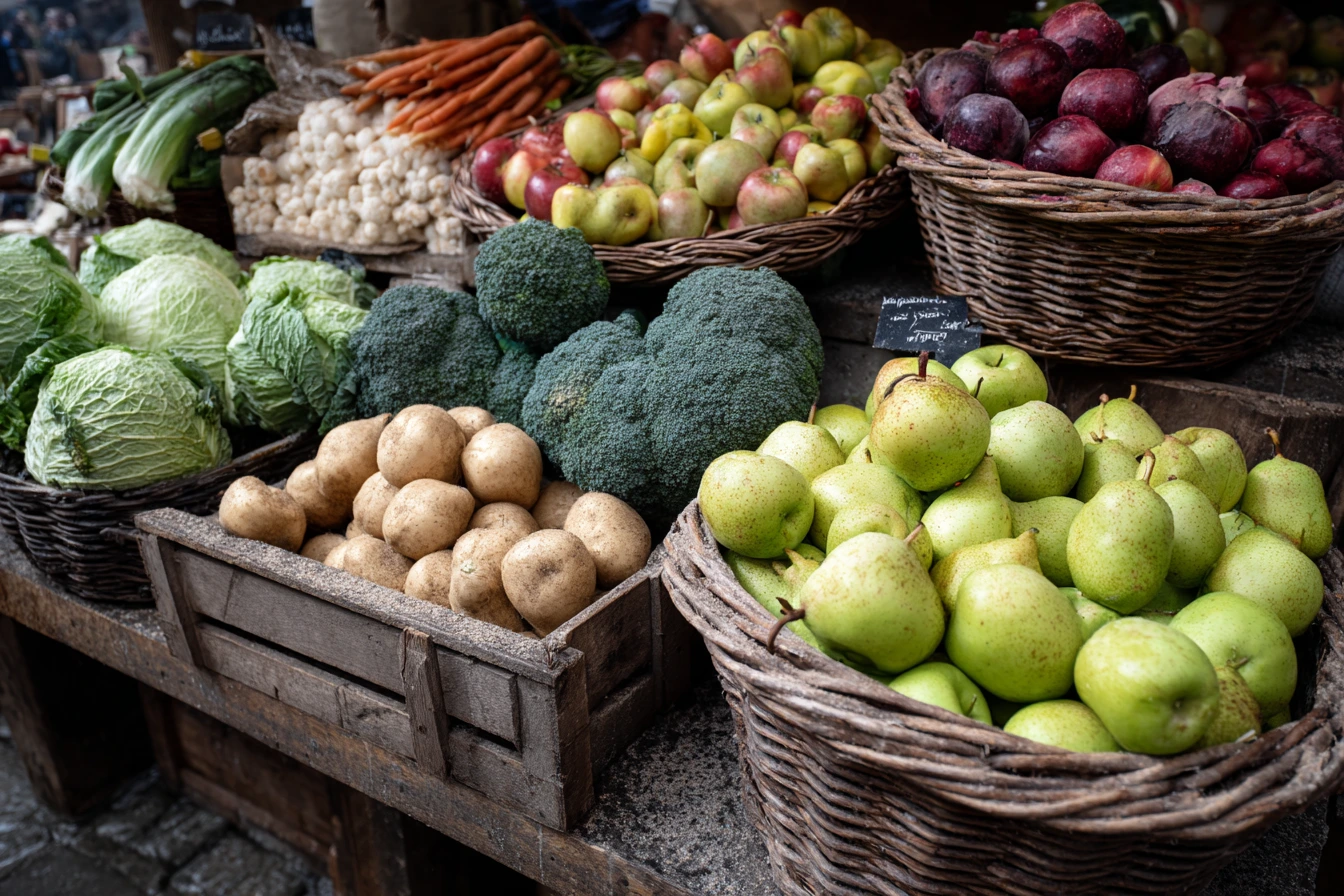
- Seasonal British fruit (apples, pears, berries when they’re cheap)
- Colourful everyday veg (carrots, broccoli, red peppers)
- Windowsill herbs (parsley, basil, mint)
- Drinks you probably already have (tea, coffee, the occasional glass of red wine)
My own default is a salad – whatever I can get out of the fridge and chop up. It’s never particularly planned. Just varied.
Seasonal Rotation
Let the seasons do some of the work. Spring greens, summer berries, autumn apples, winter citrus – eating with the seasons gives you variety without planning for it. Different times of year naturally bring different flavonoid profiles, which is probably no coincidence.
The Honest Assessment
Does eating more colourful plants guarantee a long life? No. One dietary pattern doesn’t override genetics, sleep, stress, or any of the other factors that shape health outcomes. But prioritising plant food variety is one of the more defensible things I can recommend, and it works alongside everything else rather than instead of it.
The healthy user bias critique, rather than undermining this research, might actually be part of the story. People who eat diverse, colourful diets tend to cluster other positive behaviours around it. Does it matter if we’re not 100% sure which is driving the outcomes? Clinically, I don’t think it does. Either way, following the advice leads somewhere better.
Final Word
In medicine, we rarely wait for perfect evidence. We’d never make any recommendations if we did. We work with what’s available, acknowledge the limitations, and update when better data arrives.
The case for flavonoid diversity is, by nutrition research standards, a fairly solid one. The potential benefits are meaningful. The risk of harm is zero. The cost is low. That’s a combination worth acting on.
So why not start adding a bit more colour to your plate? The evidence is good enough.