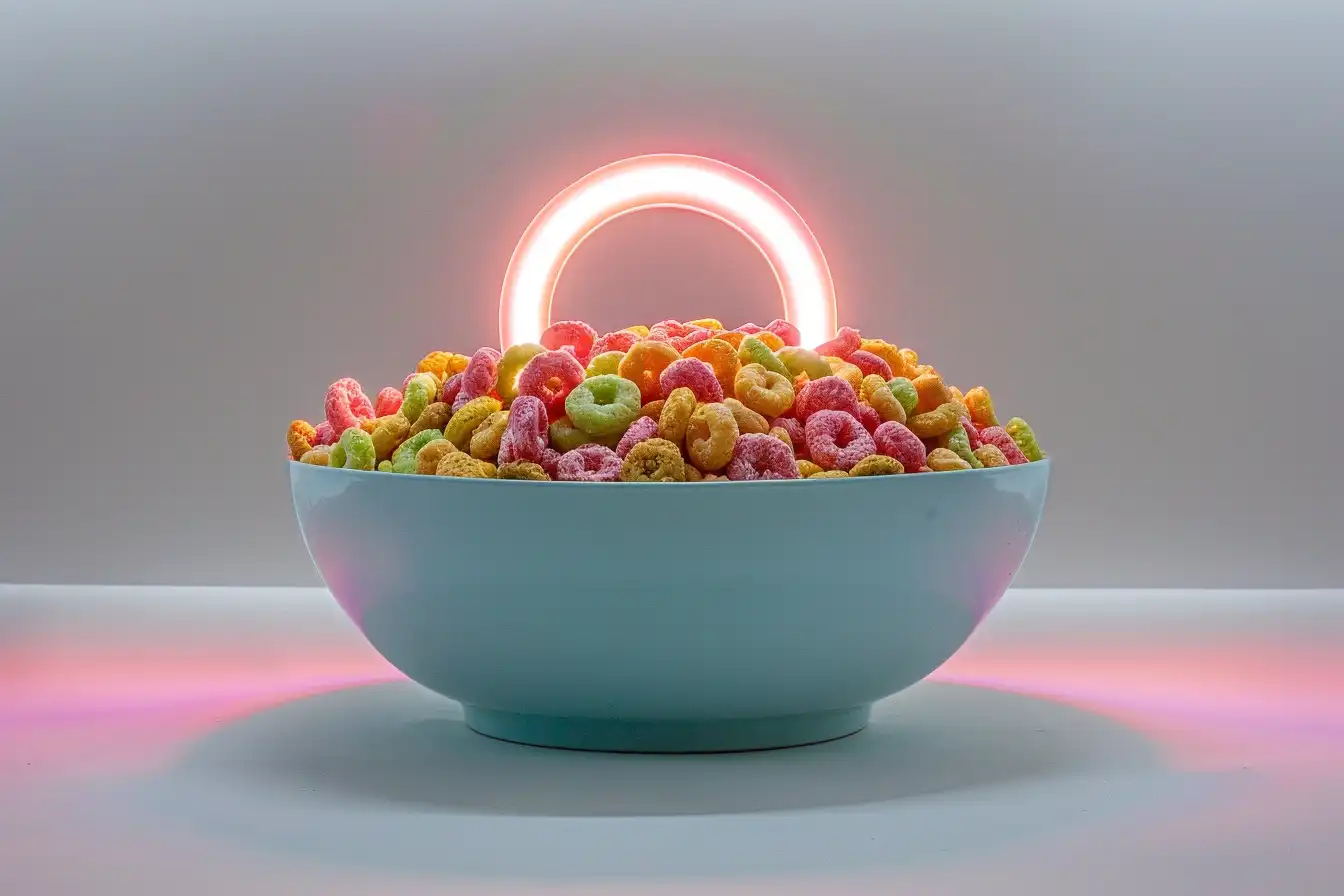
The Sneaky Influence of Health Labels
Pick up a box of cereal labelled ‘low-fat’ and your brain files it under ‘healthy choice’. Never mind the sugar content. That mental shortcut, where one positive claim shifts your whole assessment of a food, is the health halo effect, and it shapes more of what ends up in your trolley than most people realise.
Food companies know this. A single word on the front of a packet can change what you eat, how much of it, and how guilty you feel about it afterwards. Do you need to spend half your shopping trip reading labels? No. But knowing how the trick works does help.
What is the Health Halo Effect?
The health halo effect describes how a single positive label, ‘organic’, ‘low-fat’, or ‘heart-healthy’, causes you to overestimate a product’s overall nutritional value. That one favourable word and you stop reading the rest of the label. The calories, the added sugars, the salt, all get less attention.
This extends beyond individual products. Whole brands and dietary patterns acquire a halo. In my clinic, patients regularly arrive having made what feel like sensible choices, only to find that the full nutritional picture tells a different story. The good intentions are there. The labelling is doing work they don’t realise.
Common Misconceptions in Food and Beverage Labelling
Four claims in particular lead people astray. In my experience, low-fat causes the most confusion. The label sounds reassuring, but the missing fat gets replaced with processed refined carbohydrate, which most people don’t expect. Each of the four sounds reasonable. None tells the whole story.
The Psychological Impact of Health Halos
The effect operates below the level of conscious awareness, which is what makes it persistent. You don’t consciously decide that a ‘low-fat’ label gives you permission to eat twice the portion. It just happens. And the food industry has spent considerable resources understanding exactly how it happens.
One well-observed consequence is portion inflation. Foods perceived as healthy get eaten in larger amounts, which can cancel out whatever advantage they offered to begin with. The person who switches to a ‘light’ cereal and then fills the bowl a second time is exhibiting textbook health halo behaviour. The label said healthy. The body got the same calories.
There is also a compensation effect. If you’ve had a ‘virtuous’ lunch, you may feel more comfortable reaching for something less nutritious later. The mental accounting works against you, because the lunch was less virtuous than the label implied.
None of this is a character flaw. Your brain takes shortcuts under information overload. I’m aware of this effect and I still catch myself falling for it occasionally. Knowing how it works gives you a better chance of catching it. That’s about the best any of us can do.
Strategies to Avoid Falling for Health Halos
You don’t need to scrutinise every packet for twenty minutes. But a few habits make a real difference to how clearly you see through the marketing.
The front of the packet is where the marketing is. The back is where the information is. In each case, check the back.
Making Informed Choices in a Misleading Market
Good nutritional choices don’t require a degree in nutrition. They require knowing that the front of the packet is marketing and the back is information, and then using the back.
I’d describe myself as fairly cynical about this kind of marketing, but if I ever fell for a health halo, I wasn’t aware of it at the time. That’s rather the point. The effect works because it doesn’t feel like being misled.
Food shopping under time pressure, on a budget, and for a family is complicated in ways that matter. Nobody scrutinises every label every week. But building a working awareness of how health claims operate, and defaulting to whole foods when in doubt, removes a lot of the noise. A diet built mostly on whole, minimally processed foods sidesteps much of this problem to begin with. You can’t be deceived by a health claim on a bag of lentils or a piece of fish, because there isn’t one.
FAQs
What is the health halo effect?
It is the tendency to rate a food as healthier overall because of a single positive claim on the label, ‘organic’, ‘low-fat’, or ‘natural’, even when the full nutritional picture does not support that conclusion.
Can health halos be harmful?
Yes, in two main ways: they lead you to choose products that are less nutritious than you realise, and they tend to increase how much of those products you eat. Over time, both add up.
How to avoid falling for health halos?
Read the back-of-pack nutritional table, not the front. Compare products per 100g. And default to whole foods where possible, since they rarely carry health claims.
Is mindful eating effective against health halos?
It helps. Being more present while eating makes you more aware of what you are consuming, independent of what the label says.
How does a balanced diet help against health halos?
A diet based on whole, minimally processed foods avoids the labelling game. Most whole foods don’t carry health claims, which removes a significant source of confusion.
Are all health claims misleading?
No. Some are accurate and useful. The issue is that a claim can be technically true while still giving a misleading impression of a product’s overall nutritional quality.
How to balance scepticism of health claims with trust in genuine health advice?
Look at who is making the claim and whether they have a financial interest in it. NHS guidance and NICE recommendations are a reasonable starting point. If you’re uncertain about your own diet or a specific condition, it is worth speaking with your GP or a registered dietitian.