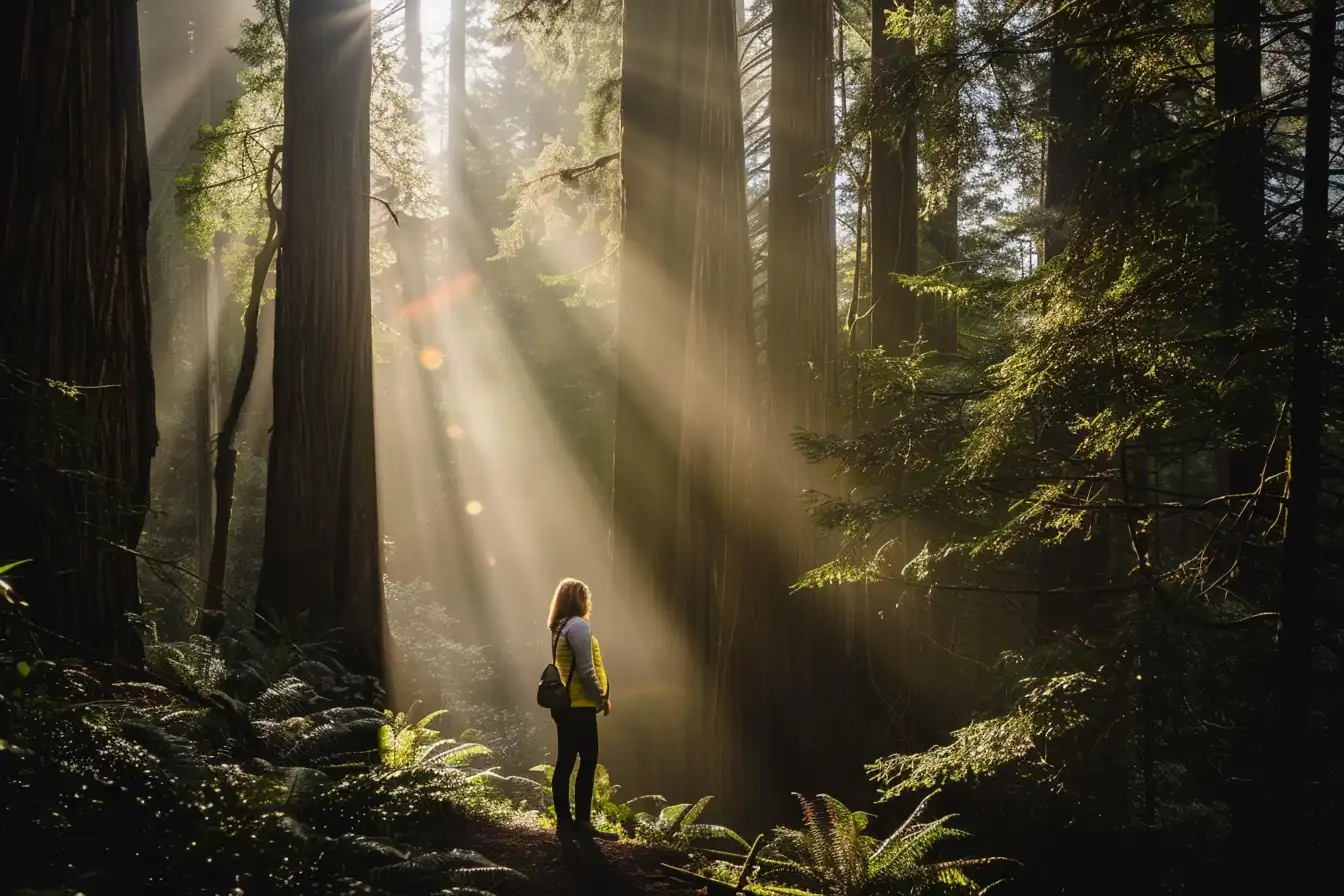
I’ve got two young children, and by 7pm most evenings my concentration is somewhere between “reduced” and “gone.” A few years ago a colleague mentioned shinrin-yoku, the Japanese practice of forest bathing, almost in passing. I was sceptical. It sounded like a walk with better marketing. But the evidence behind it is more interesting than I expected, so here’s what I actually found.
What is Nature Bathing?
Forest bathing, or shinrin-yoku, is spending time in woodland with the intention of noticing it. Not exercising, not covering distance, not ticking off a route. The goal is full sensory attention to your surroundings: the sounds, the smells, the textures, the quality of light through the canopy.
The Japanese Ministry of Agriculture, Forestry and Fisheries coined the term in the 1980s as a deliberate public health response to rising stress from urbanisation and long working hours. The idea was that nature itself is a form of therapy, and that you have to slow down to let it work. Since then, a body of research has grown around it, examining its effects on cortisol, blood pressure, immune function, and mood.
The Health Benefits
Mental Health
Time in nature lowers cortisol, the body’s primary stress hormone. That’s well established. What’s more interesting is that the effect appears stronger when you’re paying attention rather than just passing through. Mindful engagement with the environment, rather than distracted walking, seems to deepen the physiological response.
Research from Japanese institutions has found reductions in anxiety and depression scores after guided forest bathing sessions. Walking in woodland also tends to improve mood and concentration in ways that comparable urban walks don’t replicate. The current thinking points to reduced activity in the prefrontal cortex, the part of the brain most associated with rumination, though the mechanism isn’t fully settled.
Physical Health
The physical effects are less intuitive. Forest bathing has been linked to lower blood pressure and improved heart rate variability, both markers of cardiovascular health. Researchers have also found increased activity of natural killer (NK) cells, immune cells involved in fighting infection and cancer, after forest visits. The working hypothesis is that phytoncides, volatile compounds released by trees, are partly responsible for this immune effect.
Whether these immune changes are clinically meaningful over the long term is still being studied. But lower blood pressure and reduced cortisol are real, measurable outcomes. Worth knowing.
How To Go About Nature Bathing
Getting the most from forest bathing takes a bit of intention. A few things that actually help:
1. Find the right place
You don’t need a proper ancient woodland. A park with mature trees, a canal towpath lined with willows, or a large urban cemetery with old growth can work well. The Forestry England website lists publicly accessible woodland across England. In Scotland and Wales, national parks are often within reasonable distance. The key is tree cover and relative quiet, not a postcard-perfect forest.
2. Slow down
The most common mistake is treating it like a brisk walk. Slow right down. Meander. Stop. This feels odd at first, particularly if you normally walk for exercise, but it’s essential. The goal is presence, not mileage.
3. Engage your senses
The 5-4-3-2-1 grounding technique works well here. Five things you can see, four you can feel, three you can hear, two you can smell, one you can taste. It pulls attention into the present in a way that’s hard to fake, and it keeps the mind from drifting back to the inbox.
4. Stay for long enough
Most of the research studies involve 30 to 90 minutes of exposure. A five-minute detour through a park is still useful, but it’s not the same thing. Aim for at least half an hour when you can. Phone in your pocket. Not on silent. Actually in your pocket.
5. Wind down before you leave
Notice how you feel. Some people find journalling useful, writing a few observations while they’re still fresh. Others prefer to sit in one spot for 10 minutes before leaving. Schedule the next session before you go, otherwise it won’t happen.
Mindfulness in the Forest
Mindfulness isn’t a prerequisite for getting something from forest bathing, but it helps considerably. The key is staying present rather than using the walk to mentally draft your to-do list. Slow breathing, a body scan, or the 5-4-3-2-1 exercise can anchor attention when the mind starts wandering. Some people find sitting still for 10 minutes more effective than walking. Neither approach is correct. The point is deliberate attention, not a particular method.
Making It a Habit
Building a Routine
Schedule it like an appointment rather than something you’ll do “when I get a chance.” A 45-minute slot on a Saturday morning is far more likely to happen than a vague intention to get into nature more. Combining it with a dog walk, a park trip with the kids, or a lunchtime break counts. Consistency matters more than duration.
Overcoming Barriers
Time is the obvious one. Start with 20 minutes if that’s what fits. The evidence for benefit exists even for shorter exposures, though longer sessions show more consistent effects.
Weather stops people more than it should. Most of the shinrin-yoku research comes from Japan, which has four proper seasons rather than the UK’s variation of grey. A decent waterproof removes most of the problem. Preparing gear the night before removes the rest.
For Urban Dwellers
Woodland isn’t the only option. Research on urban green spaces suggests meaningful stress reduction even without full forest cover. A park with mature trees, a canal walk, or a botanical garden can replicate much of the effect. The Forestry England website is also worth checking if you want to find proper woodland nearby — it’s often closer than people assume.
If a proper woodland visit is something you can manage periodically, even monthly, the research suggests cumulative benefit. It doesn’t have to be every week to matter.
FAQs
What is nature bathing and how is it different from just spending time outdoors?
Nature bathing, or shinrin-yoku, is a mindful practice involving intentional, sensory engagement with a forest or woodland environment. It differs from an ordinary outdoor walk in that the goal is presence and relaxation rather than exercise or distance. The deliberate attention to surroundings is what the research suggests drives the health benefits.
How does nature bathing improve mental health?
Forest bathing has been shown to lower cortisol levels, reduce anxiety and depression scores, and improve mood and concentration. The effect appears tied to mindful engagement with the environment. An ordinary urban walk doesn’t tend to produce the same physiological response, which suggests the natural surroundings matter, not just the movement.
Are there physical health benefits to forest bathing?
Yes. Research has found lower blood pressure, improved heart rate variability, and increased natural killer (NK) cell activity after forest bathing sessions. The NK cell finding in particular has attracted interest from immunologists. Phytoncides released by trees are one proposed mechanism, though the science is still developing.
How long do I need to spend in nature for it to work?
Most research involves sessions of 30 to 90 minutes. Shorter exposures still have some effect, but the more consistent findings come from at least half an hour of mindful time in a green environment. Regular shorter sessions probably beat occasional long ones for most people.
Can I get benefits if I live in a city with no nearby forests?
There’s reasonable evidence that urban green spaces, parks with tree cover, canal walks, and botanical gardens can produce some of the same effects. Full forest cover isn’t essential. If you can get to woodland periodically, that’s worth doing, but you don’t need to leave the city for this to be useful.
Further Reading
Books
- “Forest Bathing: How Trees Can Help You Find Health and Happiness” by Dr Qing Li — The most cited book on the science of shinrin-yoku, from the researcher who has studied it longest.
- “The Nature Fix” by Florence Williams — A broader look at why time in natural environments improves mental and physical health, drawing on research from Japan, Finland, and South Korea.
- “Your Guide to Forest Bathing” by M. Amos Clifford — A practical guide with exercises for anyone starting out.
Websites
- anft.earth — Association of Nature and Forest Therapy. Articles, research summaries, and guides for practitioners.
- forestbathinginternational.org — Global resources on the practice, including upcoming events.
- infom.org (INFOM) — Research publications on the health effects of nature exposure.