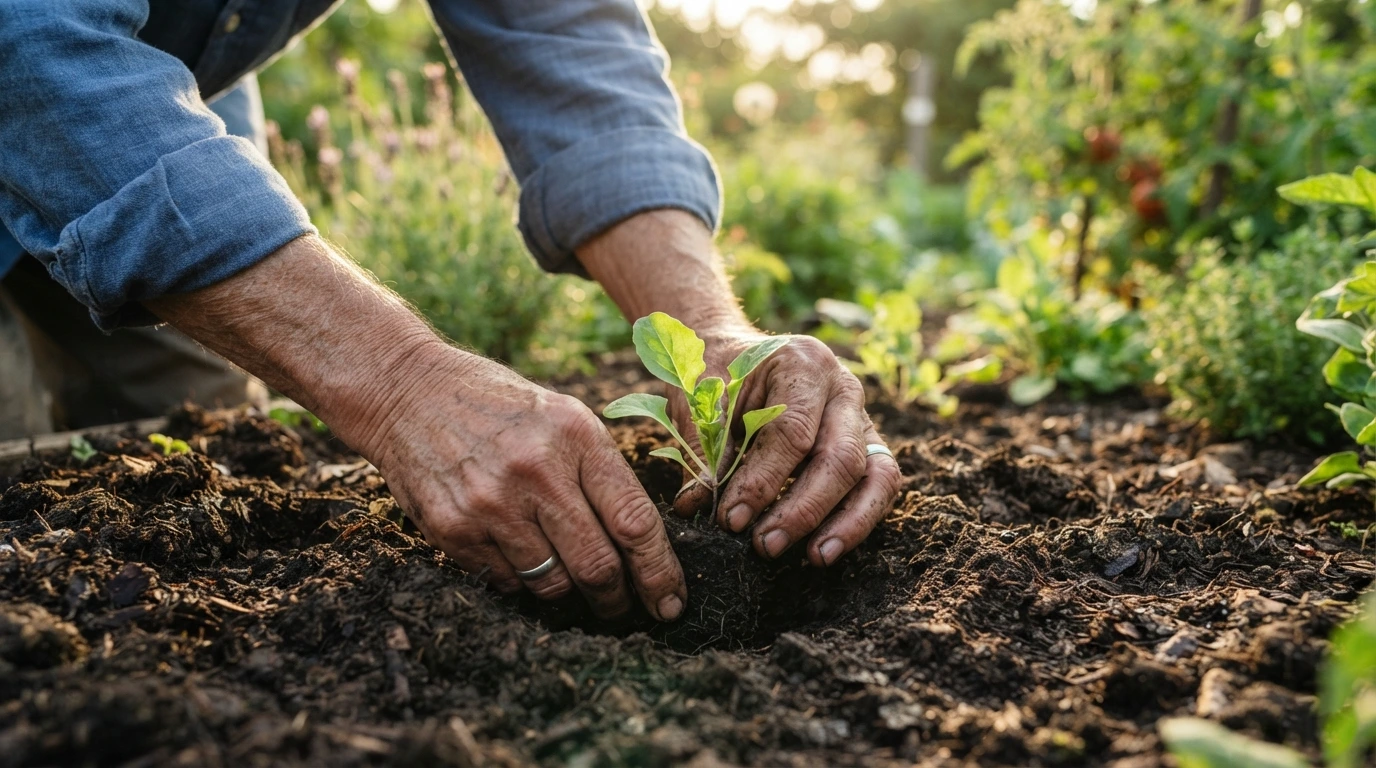
Got a windowbox? An allotment? Even a single houseplant? The health case for gardening is stronger than most people realise.
I spent the past four months remodelling my garden. Not just tidying – laying new turf, reshaping borders, doing the kind of work that takes weekends. The health benefits of gardening – mental as well as physical – turned out to be more significant than I expected. That’s what prompted this post.
You don’t need a lawn renovation to get the benefits. A windowbox, an allotment plot, a few pots on a balcony – all of it counts. And most of it costs very little.
1. Feel calmer and less anxious
There’s a growing body of work on nature exposure and stress, and the direction of travel is consistent. Caring for plants – watching something you tended from a seed grow – acts as a buffer against low mood and anxiety. The physical activity plays a part. So does the mental absorption.
That absorption is underrated. You can’t spiral through your worries when you’re working out why your seedlings are leggy or whether that’s a weed. That kind of focused attention breaks the loop.
Some plants add a sensory layer. Lavender’s calming effect has decent evidence behind it. The tactile pleasure of running your fingers over the soft leaves of lamb’s ears (stachys) is real – something I only discovered this year. Worth knowing if you’re prone to anxiety.
2. Move your body
Digging, carrying, crouching, pruning – gardening makes demands on your body, and that’s the point. The vigorous tasks raise your heart rate. The gentler ones, weeding or potting, require the kind of dexterity and flexibility that physiotherapists spend a lot of time helping people regain.
There’s also an end point, which matters. You can see what you’ve done. A cleared border, a patch of new turf, a raised bed filling out – it’s visible proof of effort. Spend a season on a garden project and you’ll understand the difference. The gym builds fitness. The garden builds fitness, and gives you something to look at.
The other thing: the season doesn’t stop it. There’s always something to do, which means the physical activity continues through the year rather than peaking in May and disappearing by October.
3. Join your community
Gardening has a community dimension that catches people off guard. You end up talking to your neighbour at the allotment, swapping seeds with plot holders you’d never have met otherwise, joining online groups where the enthusiasm is genuine.
Allotments in particular build real connections. People share advice, cover for each other when you’re away, swap what’s growing well. Many sites run talks and have a small shop. The practical stuff becomes social almost by accident.
If you don’t have outdoor space, community gardening projects are worth finding. Your local council website is the best place to start.
4. Learn new skills
Gardening has a steep learning curve that most beginners don’t expect. Soil science, companion planting, pest cycles, growing conditions that change year to year – you can do this for decades and still get surprises.
That’s useful, not incidental. Continuing to learn and staying curious have real effects on cognitive health as we age. Gardening delivers this without it feeling like homework.
The resources are good. The RHS has an extensive knowledge base online. Local gardening clubs are often free or close to it. YouTube will take you further than you need on almost any gardening question.
5. Don’t let disability get in your way
Occupational therapists and physiotherapists have been recommending gardening for decades, as part of rehabilitation and long-term condition management.
The charity Thrive has been working in this space for 40 years. They offer practical guidance on raised beds, long-handled tools, wheelchair-accessible layouts, and much more. If you’re not sure where to start with adapting your garden, they’re the people to contact first.
Most adaptations are cheaper and simpler than people expect.
Is gardening medicine? Not in the strict sense. But it’s one of the few activities that improves physical health, mental wellbeing, and social connection at the same time, for almost no cost. A few seeds on a windowsill is enough to begin.