I used to nod politely when patients told me they were managing fine on five hours. I’ve stopped doing that.
About a third of adults have sleep problems at least once a week, and chronic insomnia affects up to one in ten of us, according to NICE. In my clinic, the most common responses to that are resignation and exasperation. People assume poor sleep is something they have to manage indefinitely. For most, it isn’t.
The tips below are the ones I reach for in practice. They’re grounded in evidence, and none of them involve buying anything.
What causes sleep problems?
Caffeine is the one people most often underestimate. If you’re sensitive, anything after midday can reduce sleep quality even if you get off to sleep without difficulty. Alcohol is similar – it helps you fall asleep faster, then disrupts the second half of your sleep. You wake feeling worse than if you hadn’t had it. Large meals and nicotine close to bedtime cause similar problems.
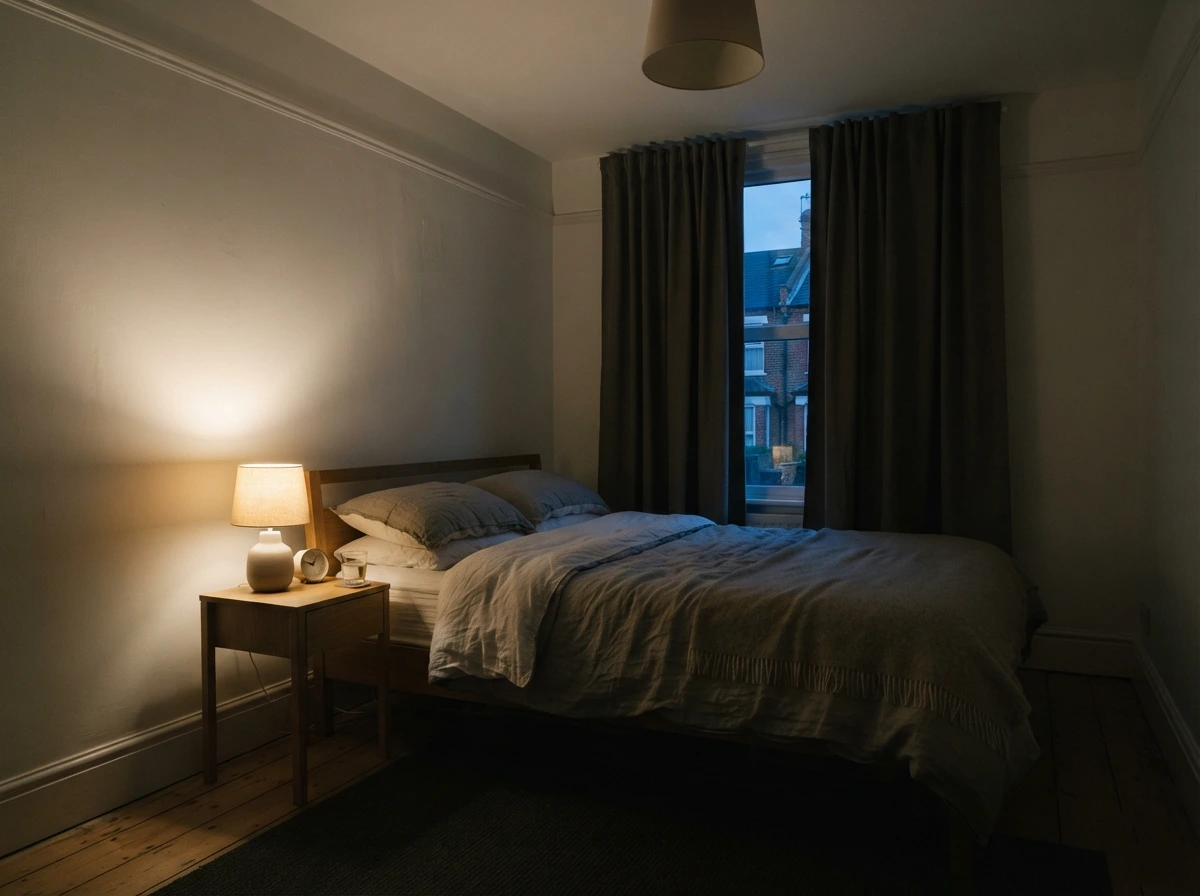
Beyond what you consume, the bedroom itself matters. A room that’s too warm, too light, or too noisy is one of the most common and most fixable insomnia triggers. An uncomfortable bed is on that list too. The NHS lists all of these as primary causes – worth ruling out before trying anything else.
1. Try sleep restriction
This sounds like the wrong advice. Sleep restriction is an approved technique for resetting a disrupted sleep pattern, and the logic, once explained, makes sense. As Prof Guy Leschziner, consultant neurologist at Guy’s and St Thomas’ Hospitals Sleep Disorders Centre, puts it: depriving yourself of sleep can help your brain re-establish a proper sleep schedule.
Work out how long you actually sleep on a typical night – not how long you spend in bed. Say you’re in bed for eight hours but sleeping for six. Your baseline is six hours. Add thirty minutes. That six-and-a-half-hour window is your allowed sleep time. Work backwards from your desired wake-up time to set a lights-out time. If you want to wake at 7am and your window is six hours thirty minutes, you won’t go to bed until 12.30am. Once you’re spending most of that window actually asleep, add thirty-minute increments back in.
Most patients look at me like I’ve suggested something unhinged when I first propose this. The ones who’ve actually followed through were, by their own admission, desperate – at the end of their tether with conventional advice. That level of motivation is probably part of why it works. Results can take one to two weeks to start.
A note on sleep trackers: they give a useful general picture, but Prof Leschziner advises against leaning on them too heavily. The data can be inaccurate, and tracking sleep closely can itself become a source of anxiety. On napping: Prof Russell Foster, director of the Sleep and Circadian Neuroscience Institute at Oxford, recommends keeping daytime naps to twenty minutes and avoiding them in the six hours before bed.
2. Sort your sleep environment
Room temperature is one of the most consistent factors in sleep quality research. The target range is 16-18°C. Below 12°C is too cold; above 24°C too hot. Most people I see are sleeping too warm rather than too cool, which is an easy fix.
If your mattress is more than eight years old and you’re waking with aches, or sleeping worse than you used to, it’s worth replacing. Mattresses degrade over time and you adapt to the decline without noticing – until you sleep somewhere else and feel the difference. The same logic applies to pillows.
3. Get outside in the morning – and off your screens at night
Thirty minutes of natural light in the morning helps reset the body clock. Daylight runs at around 10,000 lux; bright office lighting is under 500 lux. That gap explains why natural light anchors the sleep-wake cycle so much more effectively than any indoor source – it makes the biggest difference if you’re struggling with early waking or difficulty dropping off.
Blue light from phones, laptops, and tablets contributes to poor sleep and daytime sleepiness. A 2024 study in the journal Sleep found that falling asleep in front of the TV has the same effect. Stop using screens at least an hour before bed, even in night mode. Your brain needs the wind-down, not just a colour temperature shift.
If screen habits feel like your main issue, I’ve gone into more detail on building practical limits that actually stick: digital boundaries for better sleep.
4. Block out light
Higher light levels at night increase the prevalence of sleep problems by around 22%. A 2022 systematic review concluded that keeping a bedroom dark at night may be one of the most effective environmental changes for reducing sleep difficulty. Worth taking seriously.
Blackout curtains or blinds are the practical solution for most people. If your bedroom has unavoidable light – from streetlights, a partner’s phone, or early summer mornings – an eye mask is worth considering. A 2022 study in Sleep found they improved sleep quality in high-light environments.
5. Take a warm bath or shower before bed
A 2019 study found that a warm bath or shower one to two hours before bedtime improved sleep quality and duration, and cut time to sleep onset by an average of ten minutes. Not a trivial gain.
Your core temperature drops naturally at night, and that cooling helps trigger sleep. A warm bath draws heat from your core to your skin and extremities, speeding the process. If you’re trying to cool down rather than warm up, a lukewarm shower is more effective than a cold one – counterintuitive, but that’s how the physiology works.
6. Ask your GP about CBTi
If sorting sleep hygiene doesn’t shift things, cognitive behavioural therapy for insomnia (CBTi) is the most evidence-based non-medication route available. It addresses the thoughts and behaviours that maintain insomnia – not just pre-bed habits, but the mental relationship with sleep itself. Can a six-week course change years of poor sleep? The data says yes, for a lot of people.
CBTi is available digitally through NHS-supported programmes, and NICE recommends it as a first-line treatment for chronic insomnia. Ask your GP – some programmes are available at no cost through the NHS. A six-week digital CBTi programme has been shown to add almost six extra hours of sleep per week and reduce sleeping pill use.
7. See your GP if it isn’t resolving
Insomnia can be a symptom of something else. Anxiety, depression, chronic pain, sleep apnoea, and certain medications all disrupt sleep. Treating the insomnia without identifying the underlying cause tends not to work well long-term.
Sleep apnoea gets missed more than it should. I had a patient a while back who came in with low energy and low mood – he didn’t fit the classic picture at all. He was started on an antidepressant. At some point he was investigated for obstructive sleep apnoea. He had it. Once treated, he improved considerably and quickly. The sleep was the thing that had needed addressing all along.
If you’re waking unrefreshed despite enough hours in bed, snoring, or a partner has noticed you stop breathing in your sleep, bring it up with your GP rather than writing it off.
What about when the clocks change?
The biannual clock change disrupts the body clock more than most people account for. There are measurable spikes in heart attacks, strokes, and road traffic accidents in the days following the switch.
Gradual adjustment helps. In the days before the change, shift your bedtime ten to fifteen minutes earlier each night – or by thirty minutes on the Friday and Saturday if you’ve left it late. The morning after, get outside early. That applies to children and pets too, and to mealtimes. Light exposure and a consistent routine are what reset the clock.
Do sleep aids actually work?
Magnesium
The evidence for magnesium as a sleep aid is limited. A 2021 review in BMC Complementary Medicine and Therapies found insufficient evidence to make firm recommendations. Prof Leschziner notes there’s some anecdotal suggestion it may help with restless leg syndrome, but this doesn’t extend to insomnia broadly.
That said, magnesium is cheap and broadly safe. I’m not concerned if a patient wants to try it. The same 2021 review suggests under 1g three times daily as a reasonable amount to experiment with.
Lavender sprays
There’s some research on lavender essential oil and sleep quality, but nothing specific to pillow sprays, diffusers, or roll-ons. Any benefit probably comes from including them in a consistent bedtime ritual rather than the lavender itself. A predictable pre-sleep routine has a calming effect of its own.
Melatonin
Melatonin plays a real role in regulating sleep and there’s reasonable evidence it reduces time to sleep onset. In the UK it requires a prescription – it can’t be bought over the counter. In practice it doesn’t come up much in my clinic for that reason, though some patients have sourced it from abroad. Your GP can advise whether it’s appropriate for you. The NHS melatonin guide covers what it’s used for and what to expect.
It’s been demonstrated that melatonin can be helpful in terms of the time it takes to get to sleep and the quality of that sleep, but the long-term effects aren’t fully understood.
Valerian
A 2024 meta-analysis found that valerian does not have empirical support for treating insomnia. Prof Leschziner’s assessment matches: the evidence is too inconsistent to recommend it, and his view is that people should focus on therapies with better evidence behind them. Hard to argue with that.
Sleep hygiene, sleep restriction, and CBTi have the strongest evidence. That’s where I’d start – and for most people, it’s enough.